- Mon–Sat, 10:00 am – 6:00 pm
- Santa Cruz, Panjim, Goa
- realgroupgoa@gmail.com

Guide · Real Group team
Fake Note Detection Explained: UV, MG, MT, IR and CIS
Quick answer: UV checks how a note fluoresces, MG checks magnetic ink, MT checks the magnetic security thread, IR checks infrared features and CIS compares an image of the note. Each catches different counterfeits. For everyday cash, choose at least UV, MG, MT and IR; for banks and forex, choose dual-CIS.
Why one sensor is not enough
Counterfeiters copy some security features well and others badly. A machine that checks several different features is much harder to fool than one that checks only one. That is why the number and type of sensors matter more than speed when you choose a machine.
UV: ultraviolet
Genuine notes are printed on paper that does not glow under UV light, while many fakes printed on ordinary paper do. Some genuine features, such as fibres, glow in a specific way. UV is the most common and basic check.
MG: magnetic ink
Parts of a genuine note are printed with magnetic ink. MG sensors check for this magnetic signal. Photocopied and inkjet fakes usually have none.
MT: magnetic thread
The security thread in genuine notes carries a magnetic signal. MT sensors check the thread, which is difficult for counterfeiters to reproduce.
IR: infrared
Certain inks on genuine notes look different under infrared light. IR sensors check these patterns.
CIS: contact image sensor
Dual-CIS machines scan both sides of every note and compare the image with stored patterns. This gives the most reliable recognition and makes serial number reading and multi-currency counting possible.
Which level should you choose?
| Detection | Suits | Example models |
|---|---|---|
| UV + MG | Small shops, low cash volumes | 111, 222 |
| UV + MG + MT + IR | Petrol pumps, retail, wholesale, societies | 6700, 666, 999, 555 |
| UV + MG + IR + dual-CIS image | Banks, forex, hotels, cash centres | 9100, 9200, 9500 |
Check suspicious notes by hand too
No machine can promise to catch every counterfeit. If a machine rejects a note, or you have doubts, check its security features by hand. The Reserve Bank of India explains the features of each note on its Paisa Bolta Hai website.
Keep detection accurate
Dust and wear reduce sensor accuracy over time. Regular cleaning and calibration, for example under an AMC, keeps detection reliable.
Machines mentioned in this guide
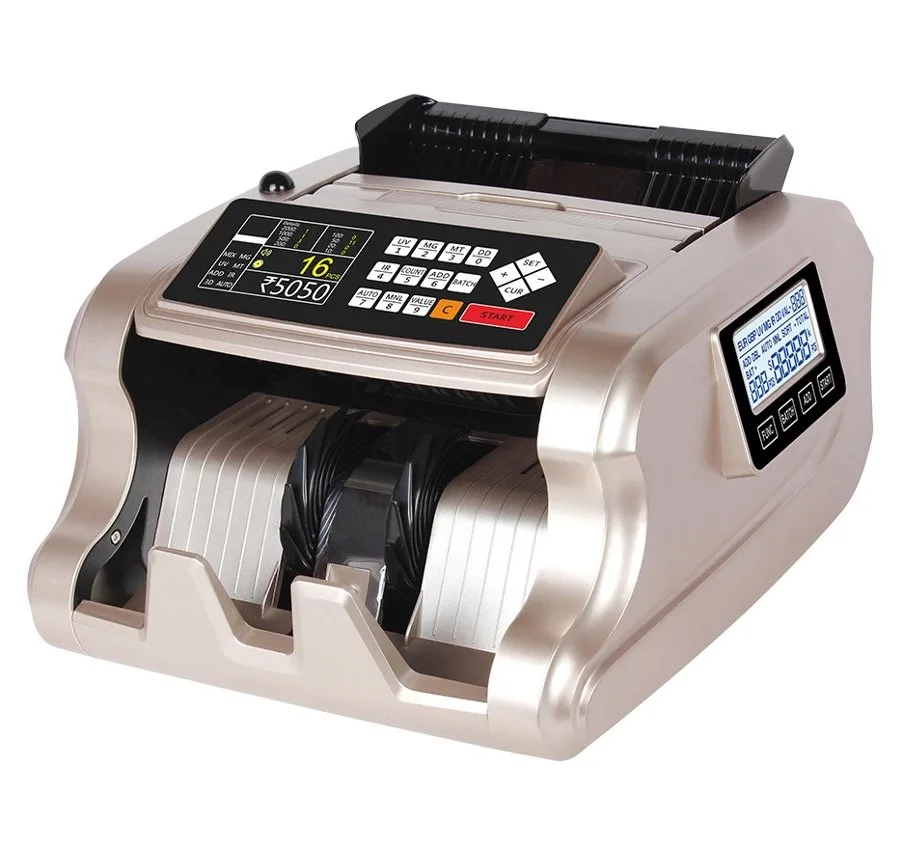
Counts a mixed bundle of notes and shows the total value and the number of notes of each denomination, with four-way fake note detection.
₹18,500 ₹36,500
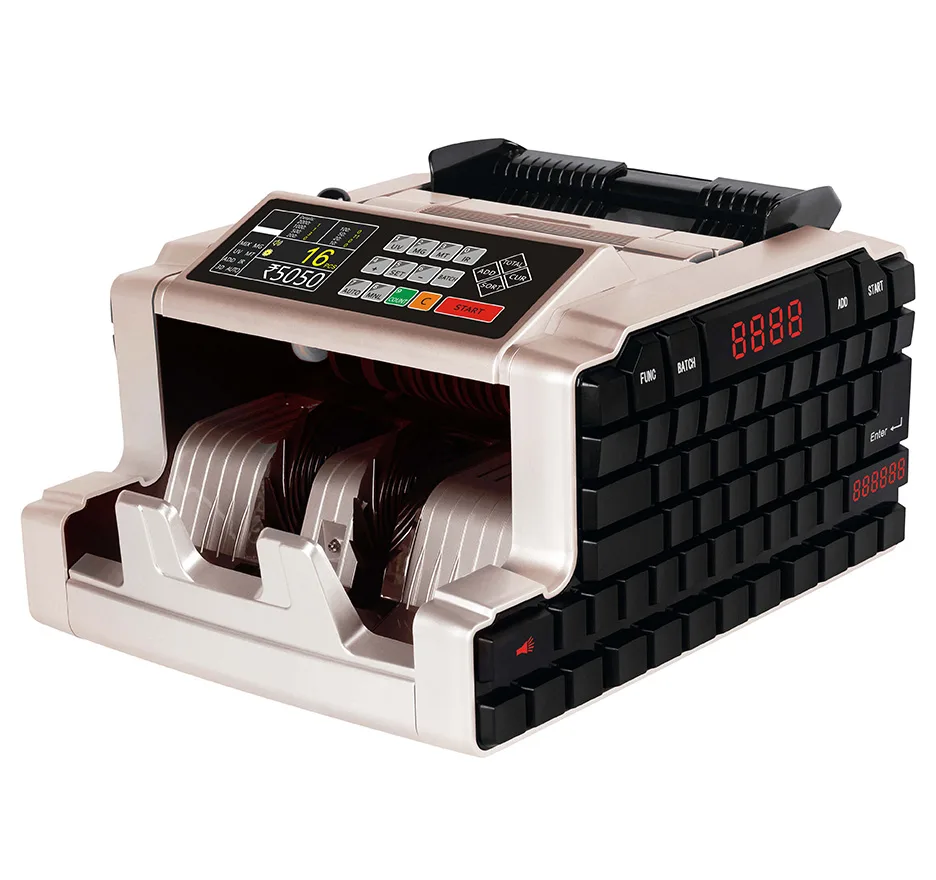
Heavy-duty mixed-value counter with UV, MG, MT and IR detection for busy cash counters.
₹18,000 ₹36,000
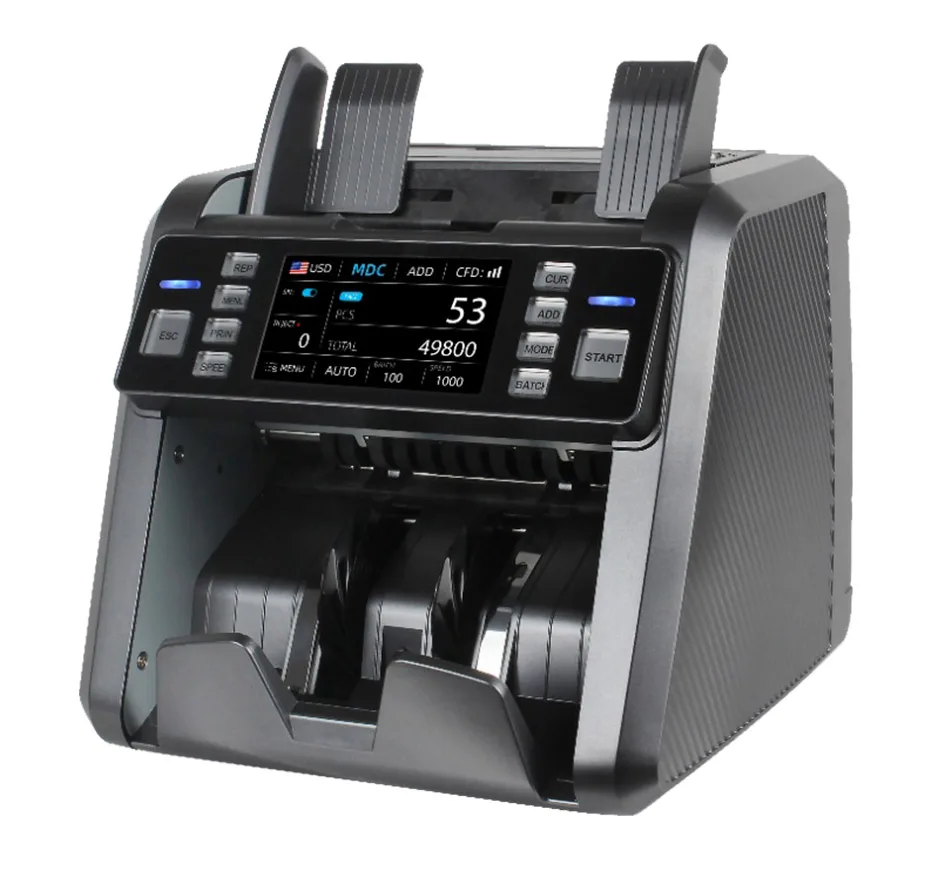
Dual-CIS multi-currency counter with a 400-note hopper for higher volumes, serial-number reading and PC connectivity.
₹38,000 ₹49,000
FAQs
Questions about this topic
Can a machine detect every fake note?
No machine can guarantee that. More sensors catch more fakes, and suspicious notes should always be checked by hand.
Why does my machine reject genuine notes?
Very worn, dirty or damaged notes, dust on the sensors or wrong settings can cause false alarms. Cleaning and calibration usually fix it.
Not sure which machine fits your business?
Tell us what you count or shred every day and we will recommend the right model and price.